
Skip to content
 Play Music, Express Yourself, Be Happy! 

SAX TEACHER UK

Improve Your Saxophone Embouchure: Keep Your Cheeks In

By SaxTeacher UK 4 min read
SaxTeacher UK — author photo

Children often have difficulty forming a solid and consistent saxophone embouchure. One of the most common problems is puffing the cheeks out while playing, which causes instability. This guide to improving your saxophone embouchure explains why this happens and offers a simple, practical tip to fix it.

Keep the Cheeks In!

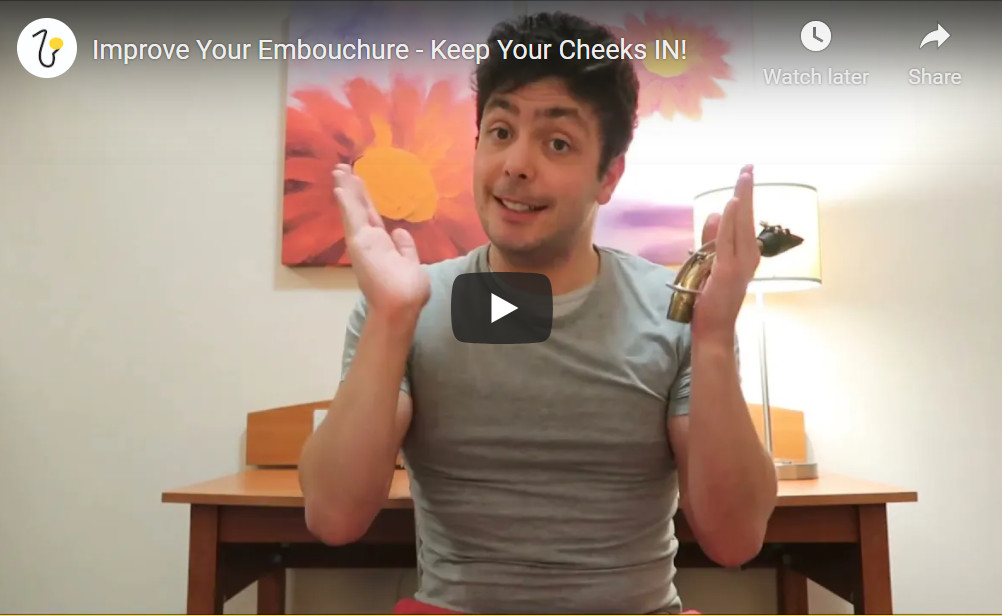
Not allowing the cheeks to puff out is a key aspect of maintaining a consistent and stable embouchure. Watch the video below and learn how to stop this common habit.

Troubleshooting

When diagnosing issues with a saxophone embouchure, it can be hard to know which element is causing the problem. Scroll down to learn how to identify and correct the most common cause.

Saxophone embouchure — keeping cheeks in for a better sound
Newsletter

Get Free Sheet Music & Tips

Tips, tutorials & new posts delivered to your inbox. No spam, unsubscribe any time.

We are committed to protecting your privacy. We will never collect information about you.

Watch: Keep Your Cheeks In

A Simple Embouchure Fix for Young Saxophonists

One of the most common questions I hear from parents of beginner saxophone students is some version of, "Why do my child's cheeks puff out when they play?" It looks endearing in family photos, but it's actually one of the biggest obstacles to a strong, controlled saxophone tone — and unlike many embouchure issues, it's something parents can genuinely help with at home, even with no musical background.

This short video walks through the fix step by step. Watch it together with your child and use it as a reference during practice sessions at home. The technique itself takes about thirty seconds to learn, but applying it consistently while playing is what builds the muscle memory that lasts. Below the video you'll find a written breakdown of the key points, common mistakes to watch for, and a realistic timeline for when you should expect to see results.

Improve saxophone embouchure — keep cheeks in tutorial video
Watch on YouTube

Form A Consistent Embouchure

Why the Cheeks Matter

The embouchure is the shape your mouth makes around the saxophone mouthpiece, and it's the single biggest factor in how your child sounds. A good embouchure produces a focused, even tone with stable pitch. A wobbly one — and puffed cheeks are the most visible sign of a wobbly embouchure — produces a sound that's airy, unstable, and difficult to control, particularly when articulating notes with the tongue.

Maintaining a solid and consistent embouchure is genuinely difficult for children. The muscles involved are small, fast-twitch, and not used for much else in daily life, so they fatigue quickly and have to be built up through regular short sessions rather than occasional long ones. The cheeks puff out when the small muscles at the corners of the mouth — the ones responsible for keeping a firm seal — are weak or simply not engaged. The good news is that engaging them is something a child can learn in a single practice session. Strengthening them takes a few weeks of consistent application.

What Causes Puffed Cheeks

Understanding the Underlying Issue

Puffed cheeks aren't a bad habit in the way that, say, slouching is. They're the natural result of air pressure inside the mouth pushing outward against muscles that haven't yet learned to push back. When a beginner blows into the saxophone, the mouthpiece offers resistance — that resistance is what makes the reed vibrate — and all that air has to go somewhere. If the cheek muscles aren't engaged, the path of least resistance is for the cheeks to balloon outward like a chipmunk's.

Three factors usually combine to cause this. The first is muscle awareness: most children have never been asked to consciously engage the corners of their mouth before, so they don't yet know what it feels like. The second is muscle strength: even once they know what to engage, those muscles tire after a few minutes of playing and start to give way. The third, and the one parents most often miss, is air control. Children who blow too hard need to recruit more cheek tension to contain the pressure, so part of the fix is teaching them to use less air, not more.

Basic Saxophone Embouchure

The Smile Technique

The fix is what I call the smile technique, and it isolates exactly the muscles that need to engage. Ask your child to smile gently — but only with the corners of their mouth, not by stretching the lips wide or showing their teeth. It's the kind of small, closed-mouth smile you might give a stranger across a room. They should feel a slight tightening at each corner of the mouth, just below the cheekbone. Those are the muscles that need to do the work.

Practise it away from the saxophone first. Have your child hold the smile for ten seconds, relax for ten seconds, and repeat five or six times. They should feel mild fatigue in the cheeks by the end — that's the signal that the right muscles are working. Once they can hold the smile comfortably without the instrument, add the mouthpiece and neck on its own, then the full saxophone. The key throughout is that the smile shape should never change when they start blowing. If the cheeks pop out the moment air enters the picture, the muscles aren't yet strong enough to resist, and you need to spend more time on the off-instrument exercise before adding back air pressure.

Common Mistakes to Avoid

What to Watch For During Practice

The most common mistake is over-smiling — pulling the lips wide across the teeth like a forced grin. This stretches the lower lip thin against the reed, which kills tone and often causes squeaks. Remind your child that the smile is a small, gentle one. The corners of the mouth move only a few millimetres. If you can see their teeth, they've gone too far.

The second mistake is creating tension elsewhere. Children sometimes interpret "engage the cheeks" as "tense the whole face," and you'll see them tightening their jaw, scrunching their forehead, or hunching their shoulders. The embouchure should feel firm at the corners of the mouth and relaxed everywhere else. If your child looks like they're concentrating physically rather than musically, ease off and start again.

The third mistake is fixing the cheeks but ignoring the air. Some students develop firm cheeks by simply blowing harder to test their new muscle strength. This produces a loud, uncontrolled tone and tires them out quickly. The goal is a steady, moderate stream of air supported by firm corners — not a battle between hard blowing and tight muscles. If your child sounds louder rather than clearer after working on this, the air needs to come down.

Use a Mirror

Developing Awareness Through Visual Feedback

Awareness is the missing ingredient that turns a quick fix into a permanent habit. Most children who puff their cheeks out have absolutely no idea they're doing it — they can't see their own face while they play, and the sensation of puffed cheeks feels completely normal to them because they've always played that way. A mirror gives them the visual feedback their nervous system needs to start self-correcting without you having to remind them every time.

Set up a small mirror at face height during home practice — a bathroom mirror works fine, or a propped-up hand mirror on a music stand. Have your child practise tonguing and playing on just the mouthpiece and neck while watching themselves. The first few minutes are usually a revelation, because they can finally see what you've been telling them about. Over the following weeks, the mirror becomes less necessary as they develop the internal feel for what a firm embouchure actually feels like. By that point, they're self-correcting before the cheeks ever puff out, and that's the moment the habit has properly stuck.

How Long Does It Take to Fix?

A Realistic Timeline for Parents

Understanding the technique is fast — most children grasp the smile method in a single five-minute session. Applying it consistently while playing takes longer, and this is where parents often expect too much too soon. As a rough guide, expect about two weeks of daily mirror practice before the cheeks stay in for a whole short piece without conscious effort, and four to six weeks before it becomes the default position whenever the saxophone is in their hands. If your child only practises a couple of times a week, double those numbers.

You'll know progress is happening when you notice the tone becoming steadier and articulation cleaner — these improvements arrive before the visual habit is fully fixed, and they're a strong signal you're on the right track. Don't get discouraged if the cheeks still pop out occasionally during difficult passages or fast articulation, even months in. Embouchure muscles are like any other: they hold up under easy conditions long before they hold up under stress, and learning to maintain them through the hardest parts of a piece is a skill that develops over years, not weeks. The goal at this stage is simply to build the foundation. The refinement comes later.

Frequently Asked Questions

Why do saxophone players puff their cheeks out? +

Cheeks puff out when the small muscles at the corners of the mouth are not engaged. This is particularly common in younger and beginner players who have not yet developed embouchure awareness or the muscle control to keep them firm.

How do I stop puffing my cheeks out when playing saxophone? +

Practise a gentle smile using only the corners of the mouth. This activates the embouchure muscles without altering the lip position on the mouthpiece. Build this habit away from the instrument first, then apply it while playing on just the mouthpiece and neck, before moving to the full saxophone.

Does puffing cheeks affect saxophone tone? +

Yes. Puffed cheeks cause instability in the embouchure, which reduces control over tone, pitch, and articulation. Keeping the cheeks firm and engaged leads to a more focused, consistent sound and makes articulation far easier to develop.

How can I help my child practise their saxophone embouchure at home? +

Encourage your child to practise the smile technique in front of a mirror, first without the instrument. When they can hold the position comfortably, add the mouthpiece and neck, and eventually the full saxophone. Short, regular sessions are more effective than infrequent longer ones.

SaxTeacher UK — Founder SaxTeacher UK Founder

SaxTeacher UK is a woodwind and piano teacher based in South East London. With 17 years of individual and group tuition experience. If you would like help with any of the topics in this article, saxophone lessons are available in person and online. Get in touch for in-person or online lessons.

All author posts

Book a Lesson

Your information will be forwarded to me and I will get back to you as soon as I can.

Sax teacher London

Give me a call

+(44)7704 762 561

We are committed to protecting your privacy. We will never collect information about you.